Introduction
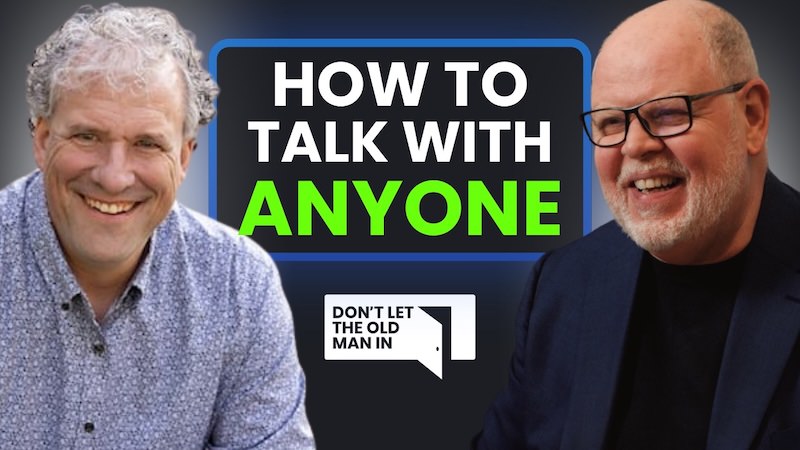
Talking to strangers is one of the quickest ways to feel happier, and most midlife men avoid it. We keep our heads down on the train and tell ourselves that making friends in midlife is harder than it used to be. Nicholas Epley, professor of behavioural science at the University of Chicago Booth School of Business and author of A Little More Social, has spent more than 15 years testing whether any of that is true.
In this episode of Don’t Let The Old Man In, he tells Pod O’Sullivan why social connection is a choice, and why we so often choose to avoid it.
Why this conversation matters
It started on a Chicago commuter train. Nick was writing about how much our health and happiness depend on other people when he looked up and saw a carriage full of highly social animals ignoring each other. So he ran a test of his own. A woman in a fabulous red hat sat down beside him, he started talking, and the 30-minute commute was over in a flash.
That morning became an experiment. Nick and his then PhD student Juliana Schroeder recruited commuters in Homewood, Illinois, and randomly assigned them to sit in solitude, do what they normally do, or talk to whoever sat down next to them. The talkers had the best trip. The solitude group had the worst.
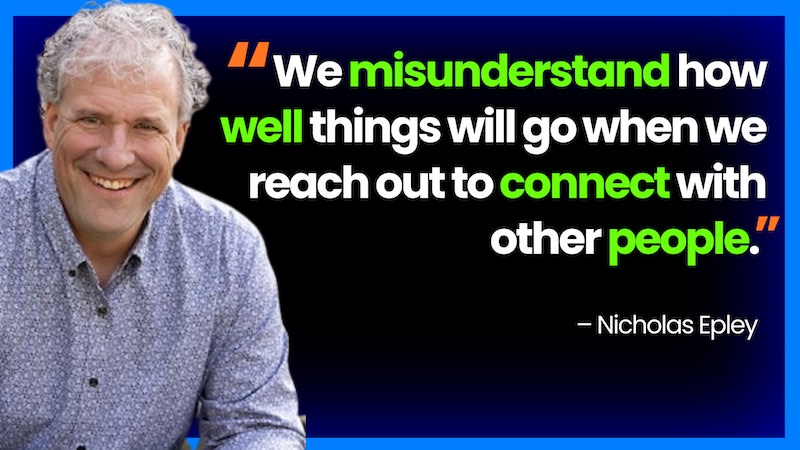
He keeps finding the same gap between what we expect and what happens. Introverts expect to enjoy a conversation less than extroverts do. Yet when researchers ask them to act more outgoing, they feel just as good, get no more tired and feel more like themselves. Nick’s conclusion is blunt: the label says more about the choices you make than the kind of person you are.
What we discuss
- Why your brain craves company the same way it craves food and sleep
- Introvert or extrovert, and why “that’s just who I am” can hold you back
- Small talk as a launch pad: getting from sport and weather to a real conversation
- Why a call beats a text: readers told sarcasm from sincerity in typed messages just 56% of the time
- Warmth over competence, and what other people are really judging you on
- What Nick’s 10-year-old daughter, who says hello to everyone she passes, has taught him about connection
Why midlife men should listen
Plenty of men have gone quiet around strangers because they’re no longer sure what’s OK to say. Nick’s answer is a line from Hewlett-Packard co-founder Bill Hewlett: never stifle a generous impulse. Tell someone on the train they look great, mean it, and move on. The stories behind the Me Too movement were about people being unkind and well understood, not kind people being misread.
He’s just as direct about friendship. We judge ourselves on competence, but other people judge us on warmth, so a smile or a kind word carries more weight than we think. And the data on happiness is clear: it comes from how often good moments happen, not how big they are.
Pod adds a story of his own. His music club had been going to gigs for 10 years, yet members learned more about each other in six months of lockdown Zoom calls, each explaining the song that mattered most to them at 14.
Nick’s advice fits in four words: when in doubt, reach out. If you’d like to say something and the only thing stopping you is worry about how it’ll land, that’s the moment to test whether the barrier is made of steel or, as he puts it, a wet pasta noodle.
Guest info
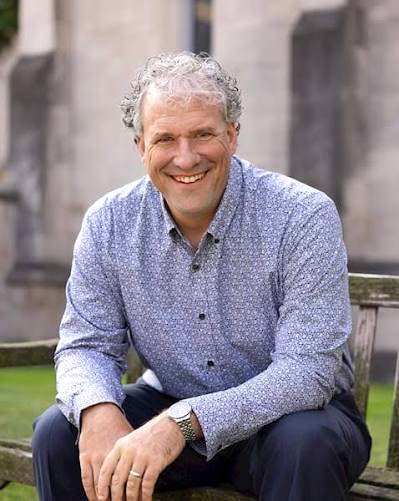
Nicholas Epley
Nicholas Epley is the John Templeton Keller Distinguished Service Professor of Behavioral Science and Faculty Director of the Roman Family Center for Decision Research at the University of Chicago Booth School of Business. He studies social cognition, or how thinking people think about other thinking people, and why smart people so often misread each other.
Nick has a PhD in psychology from Cornell University and taught at Harvard before joining the University of Chicago in 2005. His awards include the American Psychological Association’s Distinguished Scientific Award for Early Career Contribution to Psychology and the Career Trajectory Award from the Society for Experimental Social Psychology. At Chicago Booth he teaches Designing a Good Life, an MBA course on ethics and wellbeing.
He is the author of Mindwise: How We Understand What Others Think, Believe, Feel, and Want (2014) and A Little More Social: How Small Choices Create Unexpected Happiness, Health, and Connection (2026), published in the UK as Hello. He lives in Chicago with his family.