Introduction
There is a particular kind of exhaustion that comes from being good at your job and still not believing it. Ask any senior leader, business owner or high performer navigating midlife, and most will admit, quietly, to a version of the same thought: any day now, someone is going to work out I do not actually know what I am doing.
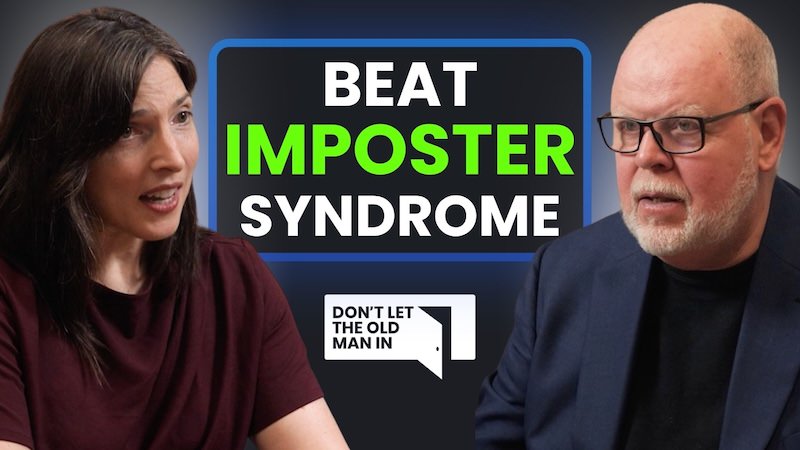
This episode of Don’t Let The Old Man In welcomes back Erin Buttermore, a strategy consultant, executive coach and PhD candidate researching the imposter phenomenon at the University of Sydney, for a second and even more revealing conversation about why capable people feel like frauds, and what that costs them, their teams and their families.
Why this conversation matters
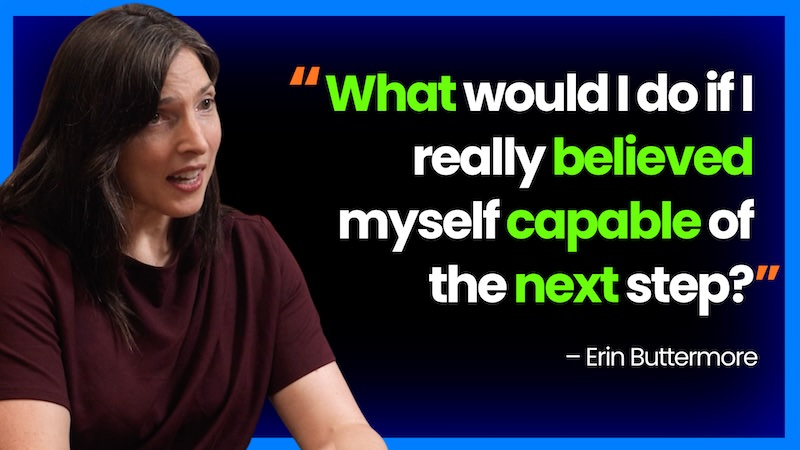
Erin’s first appearance on the show, back in December, went on to become one of the most watched episodes in DLTOMI’s history, and it is the reason she is the first guest we have ever invited back. That episode traced the shape of imposter feelings. This one goes into the engine room. Erin’s research and coaching practice centre on a genuinely counterintuitive idea: it is not a lack of ability that makes capable people feel like frauds, it is the ability itself. The higher you climb, the more ambiguous the terrain gets, and ambiguity, Erin argues, is rocket fuel for imposter feelings.
That matters enormously for the men in our audience. Around two thirds of DLTOMI listeners are men who have spent twenty or more years being the person who delivers, who fixes things, who gets promoted for showing up when everyone else has clocked off. Erin explains why that exact profile, the reliable, over-functioning achiever, is often the one running hardest from a feeling of fraudulence, and why the cost shows up everywhere from burnout and team turnover to distracted family holidays and marriages strained by a partner who is physically present but mentally still at work.
What we discuss
- The capability paradox, why the more competent and successful you become, the more your brain finds ways to discount the evidence
- The ‘flawed accounting system’ behind imposter feelings, where over-delivering does not count because it was hard, and success does not count because it was easy
- Why over-functioning, rescuing every project and refusing to delegate quietly builds toward burnout, and one senior leader’s 64% team turnover as a case in point
- The link between perfectionism and imposterism, and why they tend to travel together
- How ambition changes in midlife, and the difference between running toward something meaningful and simply running away from an unpleasant feeling
- Self-compassion as a performance tool rather than a soft option, including the three-step method that helps high performers recover faster after a mistake
- Why shame is one of the most expensive fuel sources a person can run on, and what to use instead
Why midlife men should listen
If you have ever caught yourself discounting a win because it came too easily, or because it came only after you worked yourself into the ground, this conversation names that pattern precisely. Erin does not offer five-step frameworks or platitudes about confidence. She offers a genuinely useful reframe: imposter feelings are not proof you are unqualified, they are evidence you are still growing.
For men who equate control with competence and struggle to ask for help, that distinction alone can be worth the listen. And for anyone quietly running on shame as fuel, Erin makes the case, backed by research and two decades of coaching, for something more sustainable.
Guest info

Erin Buttermore
Erin Buttermore is a Hobart-based strategy consultant and executive coach with more than 20 years of experience spanning export trade, international relations, climate change, tourism, education and skilled migration across the public, private and non-profit sectors. She holds a Master of Science in Coaching Psychology from the University of Sydney, an MBA in Policy Management, and is a certified vinyasa yoga teacher. Erin is currently completing PhD research at the University of Sydney, investigating how perceived organisational support and psychological capital relate to the imposter phenomenon.
Her work challenges the idea that impostorism is an individual flaw, framing it instead as a systemic, organisational issue that demands evidence-based intervention. Erin’s coaching practice blends cutting-edge research, real leadership experience and mindfulness-based approaches, and she is one of the most requested returning guests in DLTOMI’s history.