Introduction
What if retirement isn’t really about golf and chilling out? What if it’s actually one of the most significant identity transitions you’ll ever face?
For men in their 40s, 50s and early 60s, retirement can feel like a distant concept. But here’s the thing: the way you think about it now shapes how successfully you’ll navigate it later. And if you’re approaching retirement in the next few years, you’re likely wrestling with questions you never expected to face.
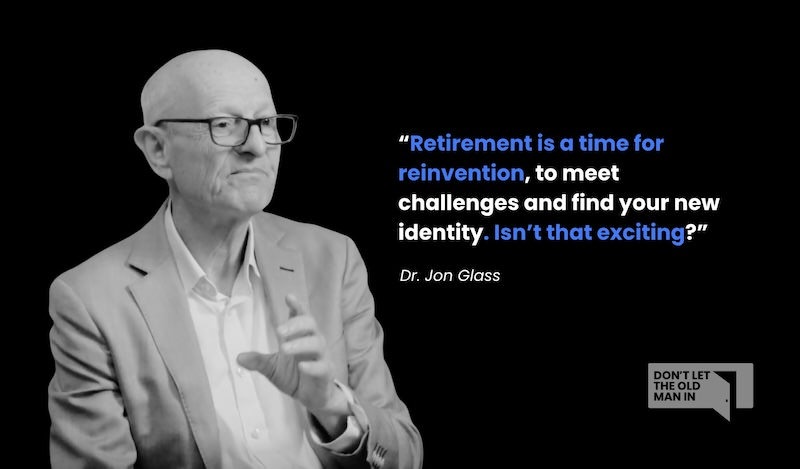
Dr Jon Glass knows this territory intimately. Starting his working life with a PhD in pure mathematics from Cambridge University, he’s made several major career transitions himself. Now, as a retirement coach, he’s on a mission to change the paradigm of what retirement actually means.
Why this matters for midlife men
We spend decades building our professional identity. We become known for what we do. Then suddenly, that identity evaporates. The phone stops ringing. The cognitive load disappears. The banter with colleagues is gone. And you’re left wondering: who am I now?
Jon introduces what he calls the three circles of retirement: wealth, health and emotions. While most retirement planning focuses on the first two, it’s the emotional circle that often catches men off guard. The fear of irrelevance. The loss of status. The question of how to fill 10,000 days of retirement with meaning rather than just busyness.
What we explore in this episode
In this wide-ranging discussion, Jon and Potto dig into the practical and emotional realities of retirement:
- The bridge metaphor: How to think about what you’ll miss as you cross from work to retirement, and what you want to carry with you
- Identity reconstruction: Moving beyond “I am a…” to discovering who you want to become
- The six Fs of retirement: Including the “wet leaf syndrome” and other dynamics that catch people by surprise
- Friendship in later life: Why men struggle to maintain friendships after work, and practical strategies like the TCS approach (text weekly, call monthly, see quarterly)
- Meaning versus busyness: How to create a portfolio of activities that brings genuine purpose, not just a full calendar
- The honeymoon period: Why it will end, and how to prepare for what comes after
- Energy management: A hidden consideration that’s often overlooked in retirement planning
Jon shares client stories that illustrate common challenges: the doctor who realised retirement would be “long service leave times 30”, the husband who became a “wet leaf” following his wife through the supermarket, and the person who wanted to ensure they remained “an interesting person” in retirement.
The four M process
Jon’s coaching framework centres on four Ms: Missing, Measuring, Meaning and Mastery. This process helps people identify their values and needs, experiment with different activities, and build a life that feels purposeful rather than just busy. It’s not about finding your purpose in four seconds, as airport bookshop titles promise. It’s about ongoing experimentation, self-reflection and flexibility.
The conversation also explores practical wisdom: the importance of younger friends, the value of creative pursuits, how to measure life in meaningful units (Jon counts his in “Woosters” – the middle-grade detective novels he writes), and why curiosity might be one of our most undervalued traits.
Guest info
Dr Jon Glass
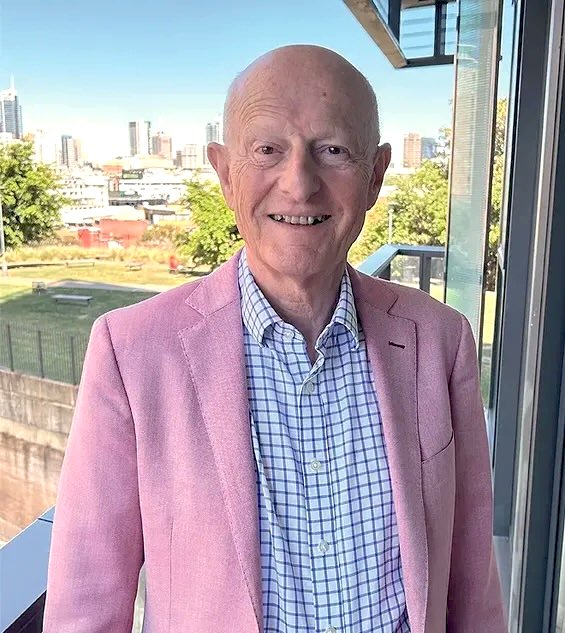
Dr Jon Glass began his career with a PhD in pure mathematics from Cambridge University before transitioning into investment management and eventually finding his calling as a retirement coach. Now in his 70s, Jon helps people reinvent their identity and find joy in retirement through his coaching practice, 64PLUS. He’s particularly passionate about changing the cultural paradigm around retirement – moving beyond the limited view of golf and leisure to embrace the opportunity for genuine renaissance.
Jon is also a creative writer, penning middle-grade detective fiction featuring his character Worcester Glen Dennis, as well as plays. He measures his remaining years not in time, but in “Woosters” – a whimsical but meaningful way of thinking about legacy and purpose.
His coaching framework, the Four M Process (Missing, Measuring, Meaning, Mastery), helps clients navigate the emotional, practical and existential challenges of transitioning from corporate life into a more intentional phase.