Introduction
Burnout is one of the most misdiagnosed problems in midlife men’s health, and Andrew May has built a career proving it. As mental skills and leadership coach to the Wallabies, the Manly Sea Eagles and world champion boxer Tim Tszyu, and the performance adviser behind some of Australia’s biggest ASX chief executives, Andrew has spent 20 years working with people whose jobs depend on not falling apart under pressure. What he sees, again and again, in elite athletes and exhausted executives alike, is not burnout in the clinical sense. It is a capacity problem: bodies and minds pushed hard without the recovery, systems or self-honesty to match.
In this episode of Don’t Let The Old Man In, Andrew sits down with Pod to unpack what burnout actually is, why so many men in their forties and fifties are getting the diagnosis wrong, and what it takes to build the kind of capacity that lasts.
Why this conversation matters
More than half of workers globally reported feeling burnt out in 2024, and four in ten executives say they feel permanently exhausted or always on, according to Deloitte research Andrew cites in the episode. In Australia, Beyond Blue data shows only 37% of men seek support when they need it, and nearly half of those who eventually do wait until they are broken, or close to it.
Andrew’s argument is that the label burnout is doing men a disservice. The World Health Organization’s ICD-11 defines it specifically as an occupational phenomenon resulting from chronic workplace stress that has not been successfully managed, not general tiredness, not a bad week, and not every executive who feels flat on a Tuesday. Most of what men in midlife are experiencing, Andrew argues, is something more useful to name and fix: a gap between the demands on them and their capacity to meet those demands. That reframe matters, because it turns burnout from an identity, ‘I am burnt out’, into a solvable equation of capacity, recovery and purpose.
What we discuss
- Why the World Health Organization’s definition of burnout is narrower than most people think, and what Andrew believes is really going on for tired, flat, disconnected men
- The five metrics Andrew uses with CEOs and elite athletes to measure capacity: resting heart rate, heart rate variability, deep sleep, exercise minutes and daily steps
- The ’50 to the power of four’ benchmark for men in their fifties, and why it matters more than motivation
- Performance-based identity versus purpose-based identity, and why an oversized performance identity is like riding a penny farthing over rough road
- Andrew’s own burnout, twice, after selling businesses to KPMG and Accor, and what it taught him about building an identity outside of achievement
- Why men are conditioned to ‘harden up’, and how that generational programming shows up differently across age groups
- What Andrew’s future self, at 75, would say to him now, and the mission he has given himself over the next 12 to 18 months
Why midlife men should listen
If you have ever sat in a meeting where senior leaders compared how burnt out they all were, like a badge of honour, this episode will reframe how you think about it. Andrew doesn’t deal in quick fixes or wearable tech gimmicks. He works with the same CEOs, athletes and elite teams whose careers depend on getting this right, and he translates what he has learned into five things any man can start measuring this week.
This is a practical, no-nonsense conversation for anyone who has been quietly telling themselves they are just tired, when the truth might be more useful, and more fixable, than that.
Download the White Paper
Burnout Proof – 5 Proven factors that inoculate you against burning out
Guest info
Andrew May
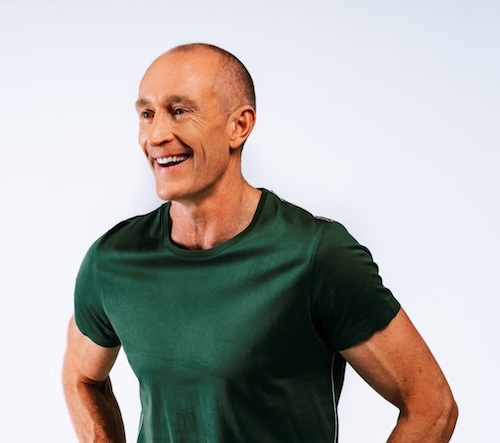
Andrew May is a mental skills and leadership coach and the founder of Performance Intelligence. He holds a Bachelor of Applied Science in Exercise Physiology and a Master’s in Coaching Psychology, and began his career as an elite middle-distance athlete before working as Physical Performance Manager for the NSW and Australian cricket teams. He has since coached the Wallabies, the Manly Warringah Sea Eagles and world champion boxer Tim Tszyu, and advises ASX chief executives, including leaders at Commonwealth Bank and IAG, on building capacity for leadership under pressure.
Andrew built and sold three businesses, including The Performance Clinic, sold to KPMG in 2016, where he then worked as a partner. He is the bestselling author of MatchFit, which has sold more than 100,000 copies, and the host of the Performance Intelligence podcast, where he interviews leading thinkers in performance, leadership and human potential.
Andrew lives in Sydney with his four children and continues to coach some of Australia’s highest-performing individuals and teams while building PQ, his performance intelligence platform.