Introduction
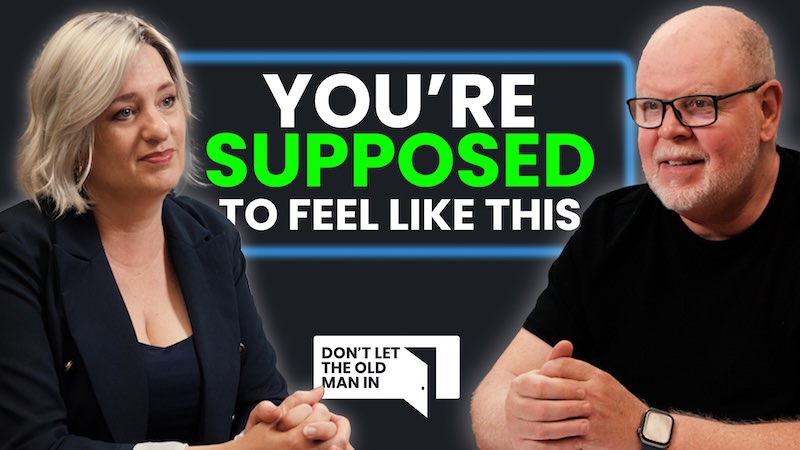
Midlife mental health in men is one of the least talked-about subjects in men’s psychology — and one of the most urgent. The fog that settles somewhere in the mid-40s, the irritability that gets written off as stress, the slow drift away from friendships and purpose: these aren’t character flaws. They’re recognised patterns, backed by research across 132 countries, and they have a name. This episode of Don’t Let The Old Man In sits down with Dr Marny Lishman — psychologist, author of Crisis to Contentment, and one of Australia’s most trusted voices on midlife psychology — to talk honestly about what’s actually going on for men in the middle years, and what the path forward looks like.
Why this conversation matters
There’s a well-documented dip in happiness that hits most people around 47.2 years of age. Professor David Blanchflower’s research across half a million data points in 132 countries confirms it: the U-shape of contentment is real, it’s global, and midlife sits right at the bottom of the curve.
Most men in that dip don’t know it’s a dip. They think something’s wrong with them. Marny Lishman spent 15 years in clinical practice watching men arrive at her door — angry, sleepless, withdrawing, drinking more than they should — sent by a GP or a partner because the grumpiness had become unmanageable. What she kept seeing was not weakness. It was overload that had never been named, and feelings that had never been given a language.
This conversation is the one Marny hasn’t been asked to have before. Every previous interview has been aimed at a general or female audience. Here, she speaks directly to men — about what she observes in male clients, what the fog before a crisis actually looks like, and what it takes to come out the other side with more clarity than you had going in.
What we discuss
- The U-shape happiness curve and why 47.2 is the statistically unhappiest age across 132 countries
- What Marny calls the “midlife fog” — and how it differs from a full-blown crisis
- Why grumpy men are her favourite clients, and what the grumpiness is really telling them
- Burnout: the physical, mental, emotional and spiritual exhaustion that creeps in slowly, and what to do when you’ve already hit the wall
- Male friendship in midlife — why men find it harder to go deep, and what it costs them
- How to start talking about feelings when you don’t have the words for them
- The connection between aloneness and contentment, and why stopping can be the most productive thing a man does
- What the wisdom inside a crisis is actually trying to tell you
Why midlife men should listen
If you’ve been feeling more irritable, more tired, more disconnected — and you can’t quite put your finger on why — this episode is worth your time. Marny doesn’t traffic in easy answers or five-step frameworks. She talks about real patterns she’s seen in real men, and she makes the psychology accessible without dumbing it down.
The research says you’re not alone in this. The clinical experience says there’s a way through. And Marny says the crisis, if you’re willing to sit with it rather than outrun it, carries wisdom you won’t find anywhere else.
Liked what you heard in this episode, but not quite sure what to do with the insights?
We have you covered.
We are releasing a short, 10-minute bonus episode that covers two things:
- What exactly should you do next, and
- Why this is guaranteed to work.
Perfect insights. No excuses.
All you have to do is execute!
Listen or watch on:
Guest info

Marny Lishman
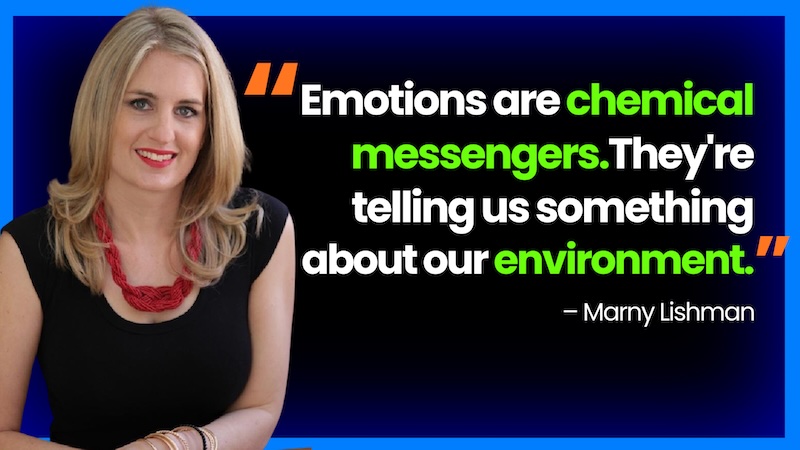
Dr Marny Lishman is a Doctor of Psychology, author, speaker and mindset coach based in Australia. She spent more than 15 years in clinical practice working across private practice, government health-prevention programs, and professional training. She is the author of four books — Burnout to Brilliant, A Beautiful Mess, Crisis to Contentment and Only You — and is a regular contributor to Australian radio and television on topics of wellbeing, resilience and midlife psychology.
Her work focuses on helping people build the psychological capacity to navigate disruption, redesign what’s next, and create a more contented life.
She brings the same honesty to her writing that she brings to her clinical work: direct, research-backed and grounded in her own lived experience.